Complete regulatory and technical roadmap for electric kick scooter manufacturers, brand holders, and importers: Spanish DGT technical manual (BOE-A-2022-987), testing with designated laboratory Bureau Veritas (direct partner), factory Conformity of Production (CoP), automated IDEX-VMP XML integration, and LEBBA's proprietary compliance software dashboard.
The Spanish regulatory framework for personal mobility vehicles (VMP — Vehículos de Movilidad Personal), led notably by electric kick scooters (e-scooters), has experienced a definitive shift from unregulated consumer electronics to strictly monitored automotive products. In Spain, the legal framework is established by Royal Decree 970/2020 and the mandatory Manual de características técnicas de los vehículos de movilidad personal published by the Directorate-General of Traffic (DGT) in the Official State Gazette under BOE-A-2022-987 (updated under Disposición 2140 of BOE no. 27).
Critical Moratorium Deadline: 22 January 2027
Any non-certified electric scooter sold before 22 January 2024 is permitted to circulate strictly under a temporary transition window ending on 22 January 2027. Beyond this date, circulating without an official DGT certificate and physical factory marking plate carries severe fines and vehicle impoundment across Spain.
For manufacturers in China, Europe, and worldwide, accessing the Spanish micro-mobility market requires far more than generic CE markings. It demands rigorous laboratory type certification with a designated Spanish technical service, continuous factory production consistency, official DGT factory marking with a permanent QR code, and electronic telematics integration with the DGT vehicle registry.
Under Spanish General Vehicle Regulations (RGV), a Personal Mobility Vehicle (VMP) is defined as:
"A vehicle of one or more wheels equipped with a single seat and propelled exclusively by electric motors capable of providing a design maximum speed between 6 and 25 km/h. They may only be equipped with a seat or saddle if fitted with self-balancing systems."
Vehicles outside these parameters fall under Regulation (EU) 168/2013 (L-category mopeds and light motorcycles, such as L1e-B), requiring full European Whole Vehicle Type Approval (WVTA) with CoC, rather than Spanish DGT VMP certification.
| Parameter | VMP for Personal Transport (V1) | VMP for Cargo / Transport of Goods (V2) |
|---|---|---|
| Max Speed | 25 km/h (electronically governed) | 25 km/h (speed diminishes under gradient) |
| Nominal Continuous Power | ≤ 1,000 W (≤ 2,000 W if self-balancing) | ≤ 1,500 W (≤ 2,500 W if self-balancing) |
| Braking Systems | 2 independent brakes acting on both wheels | 2 independent brakes + mandatory parking brake |
| Lighting & Reflectors | Front white light, rear red + brake light, lateral/rear reflectors | Yellow/amber flashing direction indicators + retro-reflectors |
| Acoustic Warning | Mandatory (bell or electronic horn ≥ 80 dB) | Mandatory acoustic warning + reverse buzzer |
| Max Weight / Dimensions | Length ≤ 2,000 mm, Width ≤ 750 mm, Mass ≤ 50 kg | Length ≤ 2,000 mm, Width ≤ 1,000 mm, Mass ≤ 400 kg |
Official certification in Spain requires physical vehicle sample submittal and testing by the designated laboratory recognized under the DGT regulatory framework. The official designated laboratory for VMP homologation is Bureau Veritas. LEBBA Automotive works directly with Bureau Veritas to manage all laboratory testing protocols, witness testing procedures, and technical documentation filings.
| Test Scope | Regulatory Standard | Pass / Fail Acceptance Criteria |
|---|---|---|
| Braking Performance | DGT Manual Section 23 / EN 17128 | Deceleration ≥ 3.5 m/s² (dry) and ≥ 2.2 m/s² (wet). Stopping distance ≤ 4.0 m from 25 km/h. Complete secondary brake redundancy. |
| Structural Integrity & Fatigue | EN 17128:2020 Annex F & G | Dynamic fatigue over rolling drum rig with 5 mm obstacles for 200,000 cycles. Zero frame fracture, fork displacement, or handlebar shearing. |
| Electrical Safety & Anti-Tampering | UNE-EN 50604-1 / UN 38.3 | IPX4 ingress protection minimum (IPX5 for battery enclosures). Controller software lock preventing software-based speed derestriction. |
| Visibility & Photometry | ECE R3 / ECE R87 / DGT Sec. 25 | Front light luminous intensity ≥ 15 lux at 10 meters; rear red light ≥ 4 candelas, active brake light indication upon lever engagement. |
In Spain, the legal and regulatory framework for Personal Mobility Vehicles (VMP) is exclusively administered by the national traffic authority:
Dirección General de Tráfico (DGT) — Competent Authority
The DGT (Ministry of the Interior) is the sole competent government body that issues the technical manual (BOE-A-2022-987), grants manufacturer registration codes, maintains the official public registry of certified VMP brands and models, and manages the IDEX-VMP telematics platform for chassis serial number reporting.
DGT-Designated Testing Laboratory (Bureau Veritas)
To obtain certification, vehicle physical testing must be performed by designated laboratories under the DGT framework. The designated laboratory of reference is Bureau Veritas. LEBBA Automotive operates in direct partnership with Bureau Veritas, coordinating complete sample submittals, testing oversight, technical compliance evaluations, and official certification issuance under the DGT Technical Manual (BOE-A-2022-987).
Through LEBBA Automotive's direct collaboration with Bureau Veritas, manufacturers submit prototype test units and technical construction files directly to the designated testing team. Once all physical tests pass and the dossier is verified, Bureau Veritas issues the official VMP Certificate, which is then registered in the official DGT registry.
Under the DGT VMP manual, a laboratory certificate must be supported by continuous Conformity of Production (CoP) controls to guarantee that serial manufacturing complies with the tested prototype:
Quality Management System & Technical Dossier
The vehicle manufacturer must maintain a documented quality system (ISO 9001:2015 scope covering vehicle assembly) detailing incoming inspection of battery cells, motor controllers, and braking components, calibration records for torque tools, and end-of-line verification procedures.
DGT Mandatory Marking Plate & QR Code
Every single manufactured unit must feature an indelible, permanent aluminum marking plate or destructible adhesive containing the manufacturer name, model, serial number, DGT certificate number, year of manufacture, and an official QR code linking directly to the DGT technical specifications portal.
To manage the technical complexity of overseas factory audits, evolving DGT regulatory interpretations, and electronic transmission of serial numbers, LEBBA Automotive engineered the proprietary VMP & CoP Regulatory Intelligence Dashboard.
Our specialized compliance software connects Asian OEMs, European brand holders, designated laboratory Bureau Veritas, and the Spanish DGT platform, eliminating bureaucratic friction and safeguarding compliance.
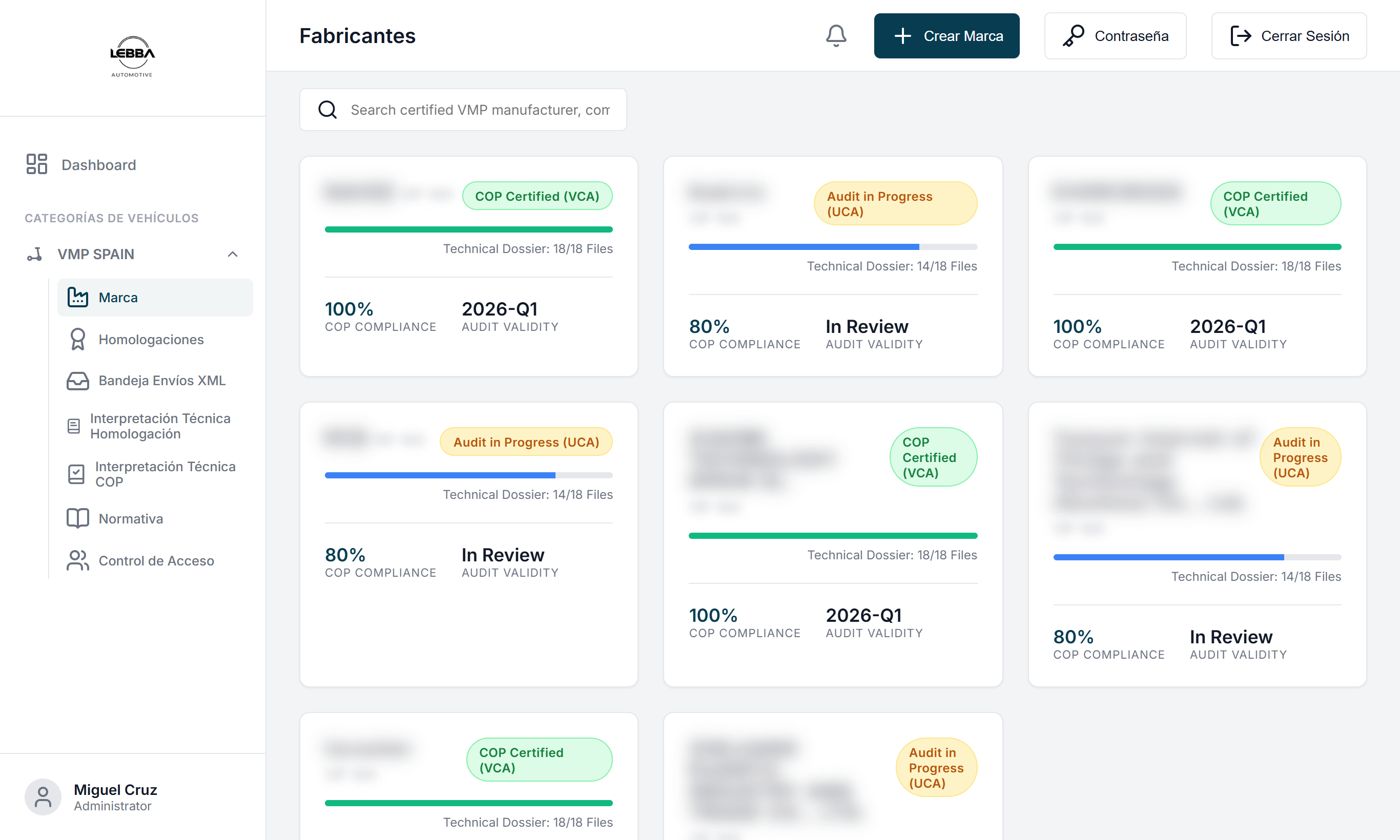
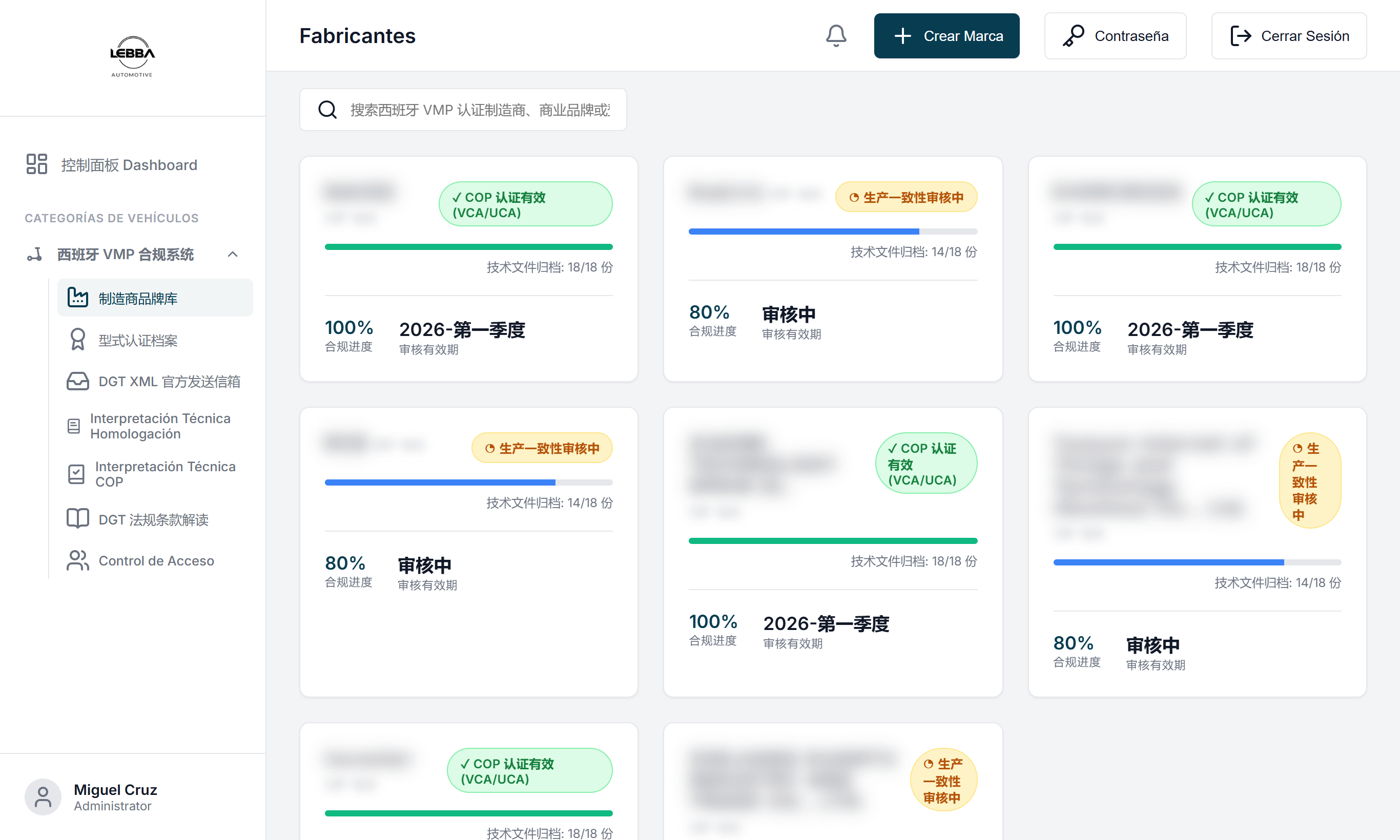
LEBBA Automotive delivers end-to-end technical homologation direction for electric scooter manufacturers, brand holders, and European importers:
| Service Pillar | Key Deliverables | Regulatory Reference |
|---|---|---|
| DGT Official Registry | Official registration of foreign OEM factory and brand in DGT database, Powers of Attorney, and legal representative representation. | DGT [email protected] |
| Laboratory Testing Oversight | Pre-testing sample audit, direct laboratory testing oversight with Bureau Veritas, and compilation of official Technical Report. | BOE-A-2022-987 |
| Ficha Reducida & Manuals | Drafting Apéndice 5 Ficha Reducida, user manuals in Spanish/English, electrical schematics, and marking plate drawings. | Apéndice 5 DGT |
| Conformity of Production (CoP) | Quality management system gap analysis, batch control protocols, and factory audit coordination. | Manual DGT Sec. 18 |
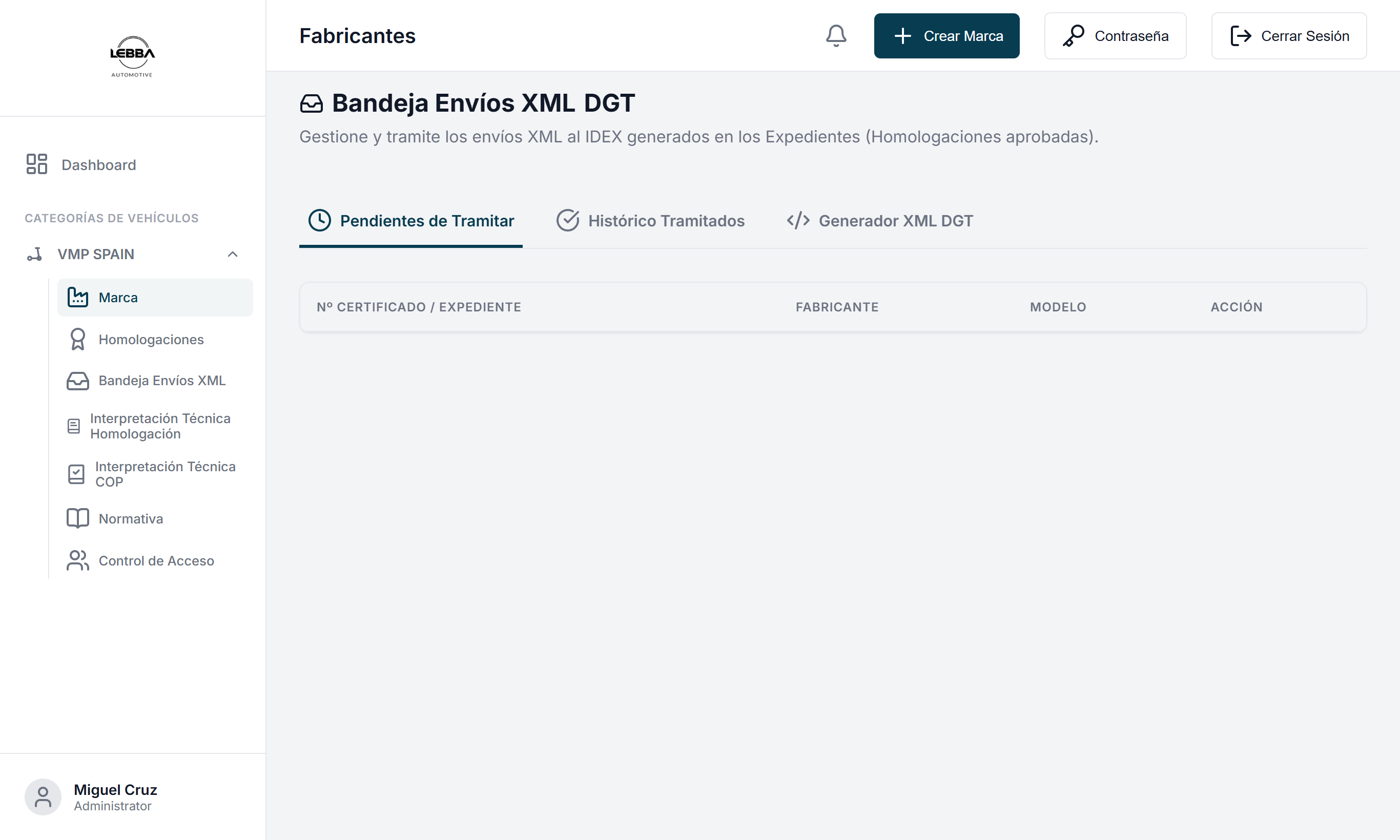
| IDEX-VMP XML Engine | Automated electronic XML batch transmission of chassis serial numbers, digital certificate issuance, and Acuse de Recibo archiving. | IDEX-VMP WebService |
Starting 22 January 2027, non-certified personal mobility vehicles (VMPs) can no longer legally circulate in Spain under any circumstances. Only VMPs possessing an official certificate issued by an accredited laboratory and listed in the DGT Registry are legally permitted to operate. Uncertified vehicles face municipal police impoundment and fines of up to €500.
The DGT requires tests to be performed by designated official laboratories. The designated laboratory of reference for VMP certification in Spain is Bureau Veritas. LEBBA Automotive works directly in technical cooperation with Bureau Veritas to execute all physical testing protocols, technical dossier reviews, and official certificate issuance.
Yes. Non-European manufacturers can appoint LEBBA Automotive as their official Authorized Representative in Spain. LEBBA acts as the legal and technical liaison before DGT and testing laboratories, holding the regulatory documentation and managing electronic XML registry communications.
In the vehicle homologation and certification sector, pre-market technical data, factory identities, and client manufacturer lists are subject to strict non-disclosure agreements (NDAs) and commercial confidentiality. LEBBA's platform displays verified audit metrics, conformity statuses, and technical parameters while safeguarding proprietary OEM identities.
Connect directly with our homologation engineering team. From designated laboratory testing with Bureau Veritas (with whom LEBBA works directly) to factory CoP quality assurance and automated DGT XML integration, we ensure your vehicles meet full legal compliance.