1. REEV / EREV Technical Architecture & Kinematics
In the accelerating global transition toward zero-emission mobility, Range-Extended Electric Vehicles (REEV)—also designated as Extended-Range Electric Vehicles (EREV)—have established themselves as a premier technological bridge. Highly developed by pioneering Asian vehicle manufacturers, this series hybrid configuration offers the seamless driving dynamics and instant torque of a pure Battery Electric Vehicle (BEV) while eradicating range anxiety through an integrated on-board power generation system.
From an electromechanical standpoint, the defining engineering characteristic of an REEV is absolute mechanical decoupling between the internal combustion engine (ICE) and the driven wheels. Unlike traditional parallel hybrids (where the thermal engine and electric motor simultaneously deliver mechanical torque to the drive axle via a multi-speed transmission) or power-split hybrids, an REEV functions as an uncompromising series powertrain:
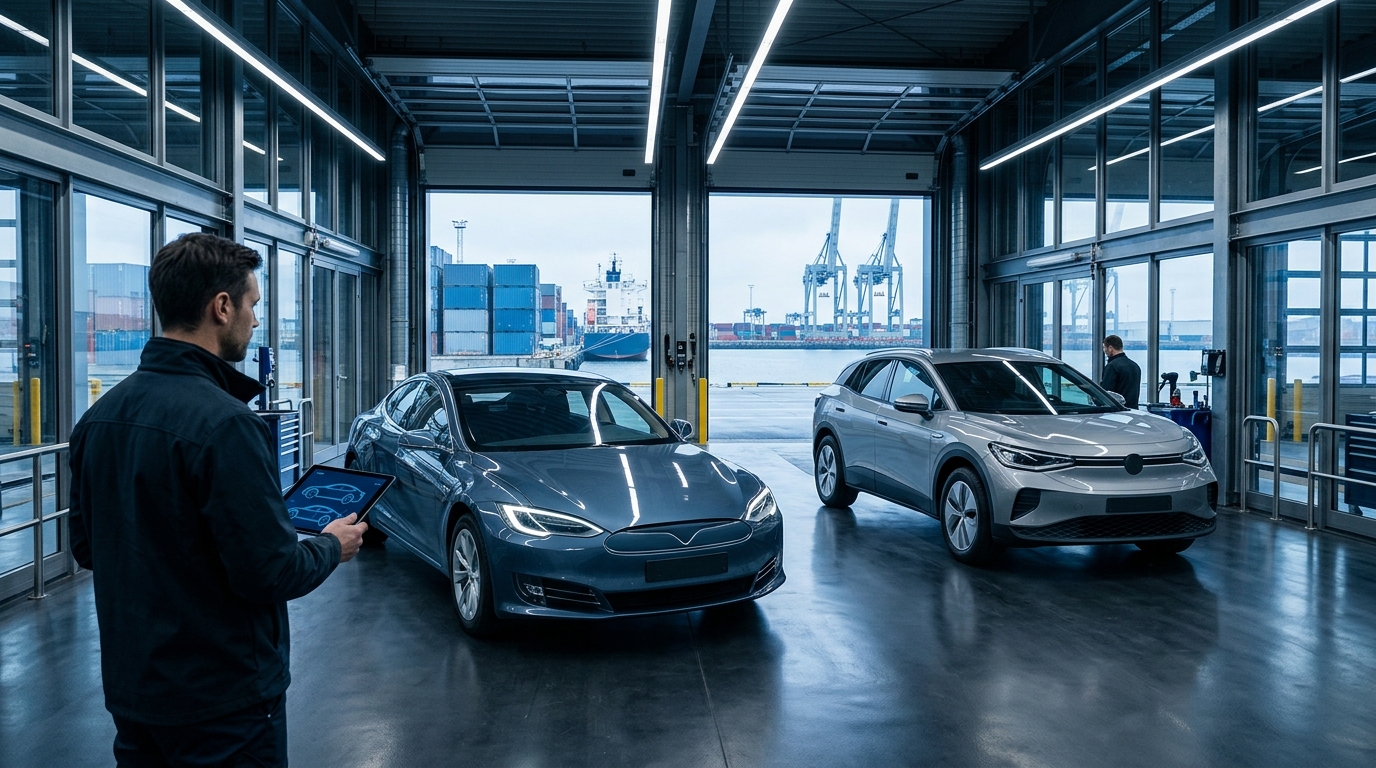
The internal combustion engine has no physical drive shaft, gearbox, clutch, or mechanical differential connected to the wheels. Instead, the engine operates exclusively as a stationary on-board power generation unit (Integrated Starter-Generator - ISG), optimized to run within narrow, highly efficient thermal brake-specific fuel consumption (BSFC) islands. The resulting alternating current (AC) is routed to a high-voltage silicon-carbide (SiC) inverter, which either charges the traction battery or directly powers the electric traction motor driving the axle.

100% Electric Propulsion
Torque and mechanical propulsion delivered to the wheels originate exclusively and at all times from the electric traction motor.
External Plug-In Charging
Equipped with an external AC/DC charging port, enabling true zero-emission operation from the public or private grid.
On-Board ICE Genset
The thermal engine functions solely as an electrical generator to replenish the traction battery, with zero mechanical wheel connection.
2. EU Homologation: Why REEV is Mandatorily Classified as OVC-HEV
Because the wheels are propelled exclusively by an electric motor, importers and non-European manufacturers frequently assume that an REEV can be type-approved in the European Union as a Pure Electric Vehicle (PEV / BEV). Under the statutory framework governing EU automotive type approval—specifically Framework Regulation (EU) 2018/858, WLTP Regulation (EU) 2017/1151, and UN Regulation No. 154—this assumption is legally inadmissible.
European vehicle approval definitions do not classify a vehicle based solely on which motor delivers torque to the wheels; they classify it based on the totality of energy converters and energy storage devices present on board:
- Pure Electric Vehicle (PEV / BEV): A vehicle propelled by a powertrain that consists of electric motors as the only propulsion energy converters, with no on-board fuel-consuming energy converter. CoC / Approval Entry 23: Pure electric: NO.
- Hybrid Electric Vehicle (HEV): A vehicle equipped with a powertrain that contains at least one fuel-consuming non-peripheral energy converter and at least one electric energy storage device.
- Off-Vehicle Charging Hybrid Electric Vehicle (OVC-HEV): An HEV equipped with an electrical energy storage system that can be recharged from an external source. CoC / Approval Entry 23.1: Hybrid electric vehicle: YES • Class: OVC-HEV.
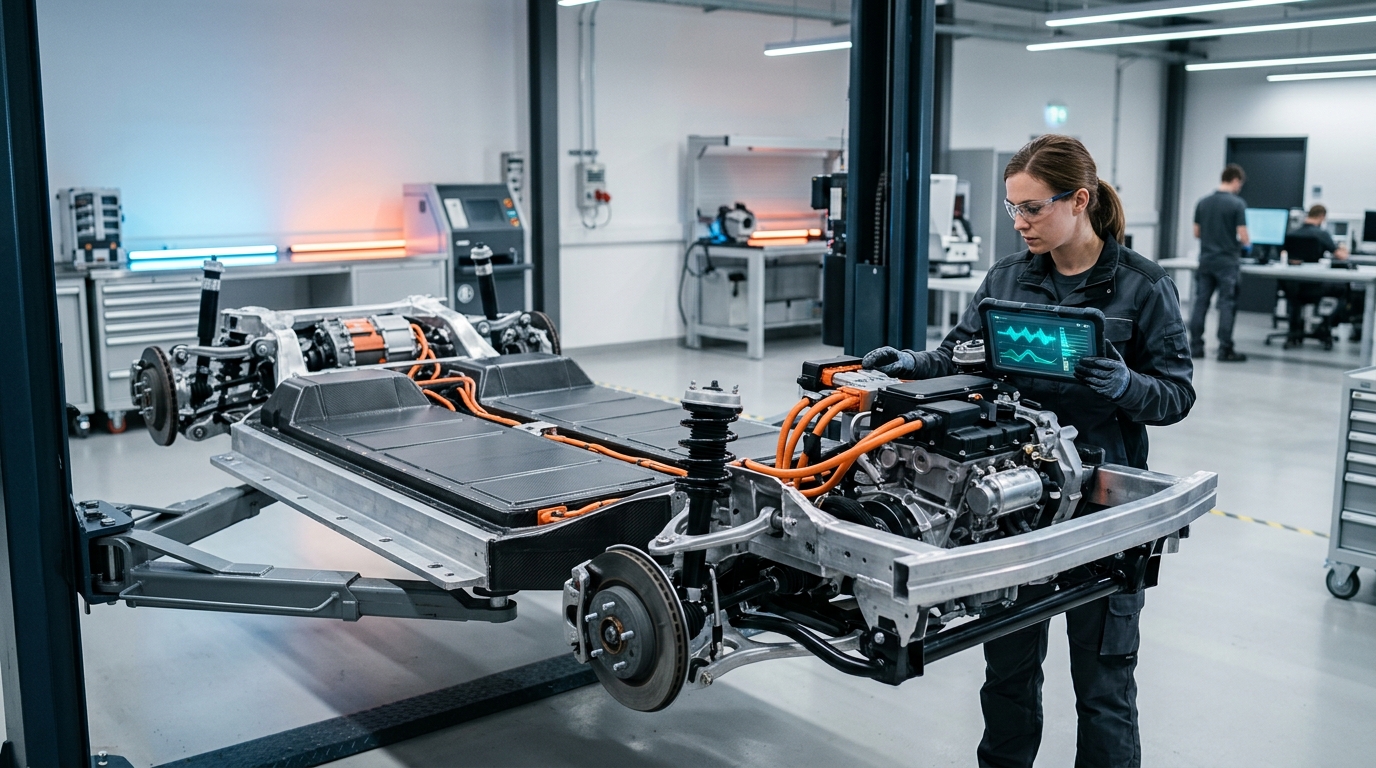
Consequently, any motor vehicle equipped with an on-board fuel tank and an internal combustion engine—regardless of whether that engine is mechanically coupled to the wheels or acts purely as a generator—must be legally type-approved as an OVC-HEV (Plug-in Hybrid Electric Vehicle). Entry 26 of the official Certificate of Conformity (CoC) or EU Individual Vehicle Approval certificate must state: Fuel: Petrol / Electric.
3. The Customs Tariff Dilemma: TARIC 8703 60 vs 8703 80
While automotive homologation authorities definitively classify an REEV as an OVC-HEV, an intense legal debate historically occurred at European port customs borders regarding the appropriate tariff heading under the Common Customs Tariff and the Combined Nomenclature (Council Regulation (EEC) No 2658/87).
| TARIC Code | Official Combined Nomenclature (CN) Description | Standard EU MFN Duty |
|---|---|---|
| 8703 80 10 00 | Motor cars and other motor vehicles principally designed for the transport of persons, with only electric motor for propulsion, new. | 10.0% (+ Countervailing Anti-Subsidy Duties) |
| 8703 60 10 00 | Motor cars with both spark-ignition internal combustion piston engine and electric motor as motors for propulsion, capable of being charged by plugging to external source, new. | 10.0% (Standard MFN Third-Country Duty Only) |
The crux of the customs debate centered on the phrasing of Heading 8703 80: "with only electric motor for propulsion". Certain importers claimed that because the thermal engine does not produce mechanical torque directly to the wheels, the vehicle is driven "only by an electric motor" and should be declared under 8703 80.
However, binding classification precedents issued by the World Customs Organization (WCO) Harmonized System Committee and the European Commission Customs Code Committee established clear legal doctrine: because the combustion engine supplies electrical power directly into the propulsion circuit during driving, it forms an integral part of the overall vehicle propulsion system.
4. Strategic Impact: EU Anti-Subsidy Duties Exemption (Regulation (EU) 2024/2754)
This distinction between TARIC 8703 80 and 8703 60 has evolved from an administrative classification nuance into the single most decisive financial factor for vehicle importers and distributors in Europe.
In October 2024, the European Commission enacted Commission Implementing Regulation (EU) 2024/2754, imposing definitive countervailing duties on imports of new battery electric vehicles (BEVs) originating in the People's Republic of China. Depending on the vehicle manufacturing group, these punitive duties range from +7.8% up to +35.3%, levied cumulatively on top of the standard 10.0% third-country MFN customs duty.

| Powertrain Technology | TARIC Heading | Standard EU MFN Duty | EU Anti-Subsidy Duty (Reg. 2024/2754) | Total Import Tariff Burden |
|---|---|---|---|---|
| Pure Battery Electric Vehicle (BEV) from China | 8703 80 10 00 | 10.0% | +7.8% to +35.3% (Definitive) | 17.8% to 45.3% |
| Range-Extended Electric Vehicle (REEV / EREV) | 8703 60 10 00 | 10.0% | 0.0% (EXEMPT BY LAW) | 10.0% Only |
Regulation (EU) 2024/2754 explicitly limits the scope of the anti-subsidy investigation and countervailing duty application strictly to CN code 8703 80 10. Vehicles falling under CN code 8703 60 10 (Plug-in Hybrids and REEVs) are legally excluded from the countervailing duty mandate.
This creates an immense economic advantage: an importer bringing in a fleet of premium REEV models pays only the baseline 10.0% customs duty, preserving profit margins of up to 35.3% per unit compared to an equivalent pure BEV, while delivering a vehicle that end-consumers experience as a smooth, 100% electric drive with over 100 km of daily zero-emission range.
5. Import Compliance Route: EU Individual Vehicle Approval (Art. 44)
For vehicle manufacturers and commercial importers introducing model variants that do not yet possess full European Whole Vehicle Type Approval (WVTA), Regulation (EU) 2018/858 provides two distinct individual approval pathways with profound differences in cross-border validity:
EU Individual Vehicle Approval (Art. 44)
Pan-European Binding Validity: Issued by an EU Type Approval Authority (TAA). An EU IVA certificate legally obligates all 27 EU Member States to permit direct registration under mutual recognition, without requiring re-testing.
National Individual Approval (Art. 45)
Territorially Restricted: Valid only within the issuing Member State. Registering the vehicle in another EU country requires bilateral convalidation, subject to administrative delays and potential rejection.
To achieve an EU Individual Vehicle Approval (EU IVA) under Article 44, a designated and accredited Technical Service (operating under ISO/IEC 17020 and ISO/IEC 17025) must physically inspect the vehicle and audit its regulatory compliance dossier across mandatory UN Regulations:
- High-Voltage Electrical Safety (UN Regulation No. 100): Verification of galvanic isolation, direct/indirect contact protection, pyro-fuse disconnects, and overcharge safety.
- Electromagnetic Compatibility (UN Regulation No. 10): Full EMC testing for inverters, DC-DC converters, BMS communication buses, and charging ports.
- Braking Performance (UN Regulation No. 13-H): Evaluation of decoupled regenerative electrohydraulic braking and electronic stability control (ESC).
- WLTP Tailpipe & Evaporative Emissions (UN R154 / Reg. 2017/1151): Demonstration of Euro 6e / Euro 7 compliance for the on-board ICE generator unit.
- Acoustic Vehicle Alerting System - AVAS (UN Regulation No. 138): Mandatory audible pedestrian warning emission during low-speed electric cruising.
6. Customs Clearance & Vehicle Taxation: Spain & Andorra Operations
Beyond EU-wide tariff defense, vehicle importers require robust operational execution at local border crossings and national registration tax authorities. LEBBA Automotive coordinates specialized customs clearance and fiscal optimization across Southern Europe, with special focus on Spain and the Principality of Andorra:
A. Spanish Customs Clearance (DUA) & Port Entry Hubs
Spain represents a primary gateway for automotive shipments arriving from Asia via deep-water container terminals in Valencia, Barcelona, and Algeciras. During the Single Administrative Document (DUA) filing:
- Import VAT & Customs Warehouse Regime: Deferred import VAT mechanisms or bonded warehousing (Depósito Aduanero) permit staging vehicle fleets without upfront duty disbursement until distribution.
- IEDMT (Special Vehicle Registration Tax) Exemption: Under Spanish Law 38/1992, vehicles with official WLTP CO2 emissions ≤ 120 g/km are taxed at 0.0%. Because REEV models register weighted combined CO2 emissions typically between 15 and 35 g/km, the registration tax is exactly 0.00 €.
- DGT Blue "CERO Emisiones" Environmental Badge: The Spanish Traffic Authority (DGT) grants the coveted blue "CERO" sticker to OVC-HEVs with an electric range ≥ 40 km. Modern REEVs achieve 100–180 km of electric range, providing full access to Low Emission Zones (ZBE), free municipal parking (SER), and HOV lane privileges.
B. Principality of Andorra: Non-EU Cross-Border Transit & Import Management
The Principality of Andorra, located between Spain and France, maintains a unique fiscal and customs status:
- Outside EU Customs Territory: Andorra is not part of the EU Customs Union for industrial products under Heading 8703. Consequently, vehicles entering Andorra are not subject to EU countervailing anti-subsidy duties regardless of technology.
- External Customs Transit (T1) Through Spain: Vehicles arriving at Spanish ports intended for Andorra are transported under Community transit procedures (T1 document) with suspended customs duties and VAT until reaching the Andorran border customs posts (Farga de Moles).
- Andorran General Indirect Tax (IGI) & Green Taxation: Vehicles imported into Andorra pay low indirect taxation (4.5% general IGI, reduced or zero for highly efficient electrified vehicles), requiring specialized customs clearance documents with Andorran authorities.
7. Cross-Regulatory Comparison Matrix
The table below summarizes the multi-tier regulatory classification of a modern REEV / EREV across European type approval, customs tariffs, and national fiscal authorities:
| Regulatory Domain | Governing Legislation | Legal Classification | Determining Technical Criterion | Economic / Operational Impact |
|---|---|---|---|---|
| 1. EU Automotive Homologation | Regulation (EU) 2018/858 Regulation (EU) 2017/1151 |
OVC-HEV (Plug-in Hybrid) | Presence of an on-board fuel-consuming thermal converter. | CoC / EU IVA issued with "Petrol / Electric". Full 27-state mutual recognition under Art. 44. |
| 2. EU Customs Tariff (TARIC) | Combined Nomenclature (CN) Council Reg. (EEC) No 2658/87 |
TARIC 8703 60 10 | Combustion engine forms an integrated part of the propulsion system. | Baseline 10.0% MFN customs duty. 100% Exemption from EU anti-subsidy duties (Reg. 2024/2754). |
| 3. Spain Registration Tax (IEDMT) | Spanish Law 38/1992 (Special Taxes) | Tax Bracket 0.0% | Official WLTP combined CO2 emissions ≤ 120 g/km. | 0.00 € registration tax payable, saving up to 14.75% of vehicle taxable base. |
| 4. Spain Traffic Authority (DGT) | DGT Resolution of 13/04/2016 | Zero Emission (CERO) | Pure electric WLTP range (EAER) ≥ 40 km (actual: 100–180 km). | Blue environmental badge: unrestricted Low Emission Zone (ZBE) access and free parking. |
| 5. Andorra Customs & Entry | Andorran Customs Code & IGI Law | T1 Transit / Andorran Clearance | Transit through EU under T1 suspension to Andorran border. | Exempt from EU trade measures; subject to Andorran IGI (4.5% or lower for electrified vehicles). |
8. Frequently Asked Questions (FAQ)
9. Intellectual Property, Copyright & Legal Safeguards
Intellectual Property & Authorship: All regulatory analysis, customs classification matrices, vector kinematic schematics, technical illustrations, and editorial content published in this guide constitute original intellectual property developed by LEBBA Automotive for technical, educational, and professional regulatory advisory purposes.
Statutory Citations & Confidentiality: Official references to European Union regulations (Regulation (EU) 2018/858, Regulation (EU) 2017/1151, Regulation (EU) 2024/2754), United Nations regulations (UN/ECE), and international customs tariff codes (TARIC, Combined Nomenclature, WCO) are cited under standard legal quotation doctrine for statutory compliance purposes. This guide utilizes abstract technical archetypes and contains no confidential manufacturer vehicle data, individual approval numbers, proprietary lab report references, or restricted engineering codes.
Safeguard & Takedown Provision: LEBBA Automotive maintains rigorous respect for industrial property rights and trademarks. Should any vehicle manufacturer, regulatory authority, or trademark holder wish to query or request the modification of any terminology, reference, or graphical element in this publication, please contact our administration at [email protected] for immediate review and prompt accommodation.
Planning to Import or Homologate Electrified Vehicles in Europe?
LEBBA Automotive delivers end-to-end regulatory engineering: EU Individual Vehicle Approvals (EU IVA Art. 44), TARIC classification defense, and customs clearance management across Spain and Andorra.
Request Technical Consultation